
Faculty of Law, University of Lucknow

Description
About Faculty of Law, University of Lucknow
Verified by Lawsection.in Editorial Team | Updated: April 17, 2026
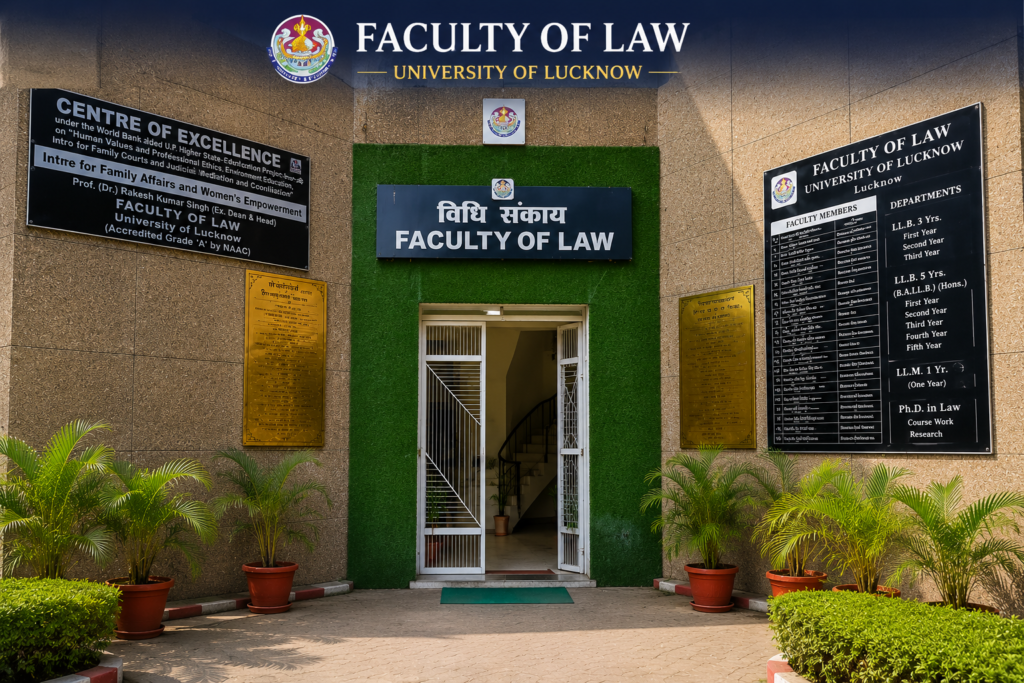
The Faculty of Law University of Lucknow is one of India’s historic public institutions for legal education. Established in 1921 with three teachers, the Faculty has contributed to legal teaching, research, advocacy, judicial services, and public life for more than a century.
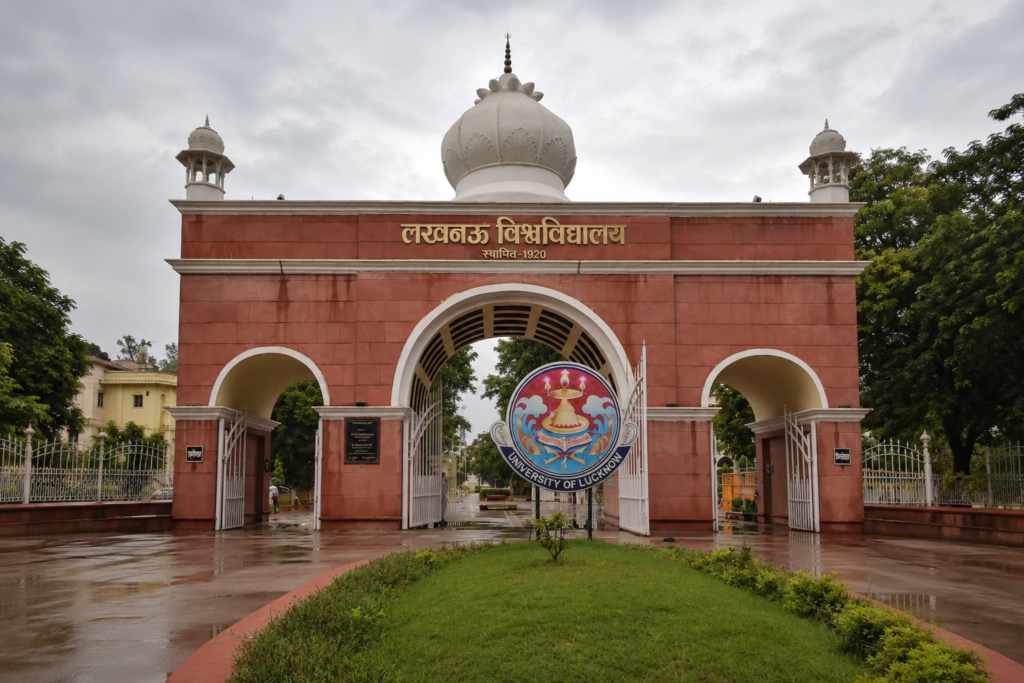
The Faculty forms part of the University of Lucknow, a public State University in Uttar Pradesh. The University traces its statutory foundation to the University of Lucknow Act, No. V of 1920. In addition, the University currently holds an A++ grade from the National Assessment and Accreditation Council (NAAC).
According to the University’s official Faculty of Law profile, Mr. Jag Mohan Nath Chak served as the first Dean of the Faculty. Subsequently, Prof. R. U. Singh played an important role in systematically developing legal teaching and research at the Faculty and continued as Dean until 1956.
Over the years, the Faculty has developed legal education and research across undergraduate, postgraduate, and doctoral levels. Moreover, it supports moot court activities, legal research, legal aid initiatives, seminars, and other academic programmes.
The Faculty is particularly known for:
- Undergraduate, postgraduate, and doctoral legal education
- A long-established tradition of legal teaching and research
- Moot court and advocacy-related academic activities
- Legal aid and pro bono initiatives
- Research and faculty publications
- A distinguished network of law graduates in the judiciary, public life, academia, and the legal profession
Furthermore, the University of Lucknow ranked 29th in India with a score of 55.85 in the official NIRF 2025 Law Rankings released by the Ministry of Education.
University Snapshot
Location
Lucknow, Uttar Pradesh, India
Faculty Established
1921
University Type
Public State University
Statutory Foundation
University of Lucknow Act, No. V of 1920
NIRF 2025 Law Ranking
29th in India
NAAC Grade
A++
Admission Cycle
As notified by the University for each academic session
Therefore, the University of Lucknow continues to hold a recognised position in Indian legal education and secured the 29th position in the official NIRF 2025 Law Rankings.
Law Programmes Offered by the Faculty of Law University of Lucknow
The Faculty of Law offers legal education at undergraduate, postgraduate, and doctoral levels. However, programme nomenclature, admission procedures, eligibility requirements, available seats, and fees may change from one academic session to another.
Therefore, applicants should always check the latest University admission brochure and programme-specific notice before submitting an application. The University currently publishes separate UG, PG, and Ph.D. admission information for the relevant academic sessions.
LL.B. Programme
Duration: 3 Years
Academic Level: Undergraduate professional law programme for graduates
Eligibility: A recognised bachelor’s degree, subject to the minimum marks and other conditions prescribed by the University
Admission Process: As notified in the University’s applicable admission brochure and admission notices
Fees: As prescribed by the University for the relevant academic session
Applicants should verify the current eligibility, admission schedule, and programme requirements before applying.
LL.B. (Integrated 5-Years)
Duration: 5 Years (Integrated)
Eligibility: Intermediate or an equivalent 10+2 qualification, subject to the minimum marks and other conditions prescribed by the University
Admission Process: Admission to the LL.B. (Integrated Five Years) programme is based on CLAT 2026 scores under the process notified by the University. If seats remain vacant, the University may fill them through the applicable University admission process
Fees: As prescribed in the applicable University admission notification
The University’s official website currently carries an important notice for LL.B. (Integrated 5-Year) admissions based on CLAT 2026 scores. Therefore, applicants should follow the latest University notice for counselling, merit, seat allotment, and admission requirements.
LL.M Programme
Academic Level: Postgraduate law programme
Eligibility: A law degree that satisfies the University’s prescribed eligibility conditions
Admission Process: Through the admission process notified by the University for the relevant academic session
Duration, Seats and Fees: As specified in the applicable postgraduate admission brochure and programme information
Applicants should review the current PG admission brochure before applying because programme-specific requirements may change between academic sessions.
Ph.D. in Law
The University offers doctoral research opportunities in Law.
The University governs eligibility, available seats, admission stages, entrance or exemption requirements, research procedures, duration, and fees through its applicable Ph.D. framework and admission notifications for the relevant session.
Admission Process: As notified by the University for the relevant Ph.D. admission session
Eligibility and Fees: Applicants should verify the current Ph.D. admission notification and programme-specific requirements before applying
The University currently maintains a dedicated Ph.D. admission section for the 2026–27 session and publishes Ph.D. notices through its official website. Therefore, prospective research applicants should check the latest doctoral admission information before submitting an application.
Overall, the Faculty provides legal education and research opportunities across undergraduate, postgraduate, and doctoral levels.
Recognition and Accreditation
The University of Lucknow is a public State University with an established statutory and academic framework. Moreover, it currently holds an A++ grade from NAAC.
For professional law education and advocate-enrolment purposes, applicants should verify the current regulatory status and requirements applicable to their specific law programme under the relevant University and Bar Council of India framework.
Key institutional highlights include:
- Public State University status
- Statutory history linked to the University of Lucknow Act, No. V of 1920
- NAAC A++ accreditation
- 29th position in the NIRF 2025 Law category
- Established Faculty of Law dating to 1921
- Undergraduate, postgraduate, and doctoral legal education
In addition, students who intend to enrol as advocates should review the current State Bar Council, Bar Council of India, and All India Bar Examination requirements applicable at the time of enrolment and practice.
Why Choose the Faculty of Law University of Lucknow?
Students seeking public university legal education in Uttar Pradesh may consider the Faculty of Law because of its long academic history, established legal teaching environment, and range of law programmes.
The Faculty may particularly appeal to students who:
- Want to study at a historic university law faculty
- Prefer public university legal education
- Are interested in litigation, legal research, judicial services, or public law
- Want exposure to moot court and advocacy-related academic activities
- Value legal aid and pro bono initiatives
- Prefer an institution with a long-established network of law graduates
- Want to study law in Lucknow, an important administrative and judicial centre in Uttar Pradesh
However, applicants should compare the programme structure, admission route, fees, curriculum, academic interests, and long-term career goals before making a final decision.
Rankings and Reputation (2026 Update)
The University of Lucknow holds the 29th rank in India in the NIRF 2025 Law category. The official ranking lists the University with a score of 55.85.
In addition, the University holds an A++ grade from NAAC. Therefore, its accreditation status forms an important part of the University’s current institutional profile.
The Faculty of Law also has a significant academic history. Its official institutional profile identifies distinguished law graduates who later served in senior positions in public life, the judiciary, academia, and the legal profession.
Consequently, the Faculty’s reputation rests on its historic academic legacy, legal education, research tradition, and the achievements of its graduates.
Documents Required for Admission at Faculty of Law University of Lucknow
The exact documents required may vary according to the programme, applicant category, admission route, and academic session.
Applicants should generally prepare relevant academic and identity documents, which may include:
- Class 10 certificate and mark sheet
- Class 12 certificate and mark sheet
- Graduation mark sheets and degree documents, where applicable
- LL.B. or equivalent law degree documents for LL.M. applicants
- Relevant entrance examination or admission-related documents, where applicable
- Recent photograph
- Valid identity documents
- Category or reservation certificate, where applicable
- Migration or transfer-related documents, where required
- Gap affidavit or certificate, where required under the applicable admission guidelines
- Other documents specifically listed in the University admission brochure, notice, or admission portal
Ph.D. applicants should separately follow the document and research-admission requirements published for the relevant doctoral admission session.
Therefore, applicants should not rely on a general document checklist alone. Instead, they should verify programme-specific requirements before admission and document verification.
Application Process for International Students
International applicants should follow the admission and student-support instructions published by the University of Lucknow and its Office for International Affairs.
The University maintains an Office for International Affairs. However, because international admission procedures and application routes may vary by programme and academic session, applicants should verify the latest instructions directly through the University before submitting documents or fees. The official international-student application page currently surfaced by the University specifically identifies an earlier admission session; therefore, applicants should not assume that the same application route automatically applies to the 2026–27 session.
International applicants should generally:
- Visit the official University of Lucknow website.
- Review the latest international student and Office for International Affairs information published by the University.
- Check the current programme and admission requirements.
- Verify programme-specific academic eligibility.
- Complete the application process prescribed for the relevant session.
- Upload or submit the documents required by the University.
- Follow the University’s admission, verification, and fee instructions.
- Complete applicable immigration and student-visa formalities after receiving the required admission documentation.
International applicants should rely on the latest University instructions because document, eligibility, admission, and immigration-related requirements may vary according to the programme, admission session, and applicant circumstances.
Important: Admission procedures, programme availability, eligibility criteria, fee structures, seat availability, entrance requirements, and regulatory conditions may change. Applicants should verify the latest information through the official University of Lucknow website and the applicable admission brochure before applying.
Best Law Institutes in Lucknow and Nearby Locations
Lucknow is an important centre for higher education, legal studies, judicial preparation, and public administration in Uttar Pradesh. Students seeking undergraduate, postgraduate, or doctoral legal education can explore National Law Universities, Central Universities, State Universities, and other recognised institutions in Lucknow and other parts of Uttar Pradesh.
These institutions differ in their admission processes, programme structures, faculty resources, research opportunities, moot court activities, internships, campus facilities, and career support. Therefore, students should compare institutions according to their own academic and professional goals.
The Faculty of Law, University of Lucknow is one of the historic university law faculties in the State. Its long academic history, legal research tradition, moot court activities, and public university environment make it a relevant option for students exploring legal education in Lucknow.
Leading Law Institutes in Lucknow and Nearby Regions
| Law Institute | Institutional Overview |
|---|---|
| Faculty of Law, University of Lucknow, Lucknow | Historic State University law faculty established in 1921 and offering legal education and research programmes. |
| Dr. Ram Manohar Lohiya National Law University, Lucknow | National Law University located in Lucknow. |
| School of Legal Studies, Babasaheb Bhimrao Ambedkar University, Lucknow | Law school within a Central University in Lucknow. |
| Amity Law School, Lucknow | Law school operating within Amity University Uttar Pradesh. |
| Faculty of Law, Integral University, Lucknow | University faculty offering legal education in Lucknow. |
| Institute of Legal Studies, Shri Ramswaroop Memorial University, Barabanki | Legal studies institute located in Barabanki, near Lucknow. |
| Atal Bihari Vajpayee School of Legal Studies, Chhatrapati Shahu Ji Maharaj University, Kanpur | Legal studies school within a State University in Kanpur. |
The inclusion of an institution in this list does not constitute a ranking or endorsement. Applicants should independently verify current programme availability, recognition, regulatory status, admission requirements, and academic information through the relevant institution and applicable authorities.
Other Leading Law Institutes in Uttar Pradesh
Students exploring legal education beyond Lucknow may also consider other recognised law institutions across Uttar Pradesh, including:
- Faculty of Law, Banaras Hindu University (BHU), Varanasi
- Faculty of Law, University of Allahabad, Prayagraj
- Dr. Rajendra Prasad National Law University (RPNLU), Prayagraj
- Faculty of Law, Aligarh Muslim University (AMU), Aligarh
- School of Law, Justice & Governance, Gautam Buddha University (GBU), Greater Noida
- Faculty of Law, Chaudhary Charan Singh University (CCSU), Meerut
Before selecting a law institute, applicants should carefully compare statutory recognition, applicable regulatory approvals, admission procedures, eligibility requirements, programme structure, faculty expertise, legal research opportunities, moot court activities, internships, placement and career support, campus infrastructure, scholarships, alumni networks, and long-term career prospects. Comparing these factors can help students identify a law institution that better aligns with their academic interests, preferred legal career pathway, and professional goals.
Frequently Asked Questions (FAQs)
1. Is a law degree from the Faculty of Law, University of Lucknow suitable for pursuing legal practice in India?
Students who complete an eligible professional law degree must follow the applicable State Bar Council enrolment requirements and the current All India Bar Examination framework for legal practice. Applicants should also verify the current regulatory status and requirements applicable to their specific programme.
2. Is admission to the Faculty of Law, University of Lucknow competitive?
Admission demand and competition may vary by programme and academic session. Applicants should carefully review the current admission route, eligibility requirements, entrance or score-based criteria, and merit process notified by the University.
3. Which should I choose: a three-year LL.B. or a five-year integrated LL.B. programme?
The appropriate pathway depends mainly on your existing academic qualification. Students entering legal education after Class 12 generally consider a five-year integrated law programme. Graduates who already hold a bachelor’s degree may consider a three-year LL.B. programme, subject to the applicable eligibility requirements.
4. Can students prepare for judiciary or civil services examinations while studying at the Faculty?
Students may independently prepare for judicial services, civil services, and other competitive examinations while pursuing their law degree. The Faculty’s legal curriculum and academic environment may provide relevant subject exposure; however, examination success depends on the applicable syllabus, individual preparation, and examination requirements.
5. What career pathways can law students explore after studying at the Faculty?
Depending on their degree, professional qualifications, interests, and further training, law graduates may explore litigation, judicial services, legal research, academia, public service, policy, corporate legal roles, and other law-related careers.
Students should review current internship, placement, career-support, and recruitment information directly through the University and Faculty before making placement-related decisions.
Study LLM Abroad: Top Law Universities in UK, USA & Canada
Planning to pursue an LLM abroad? Explore carefully curated and verified guides to top-ranked law universities in the United Kingdom, United States, and Canada. These country-wise pages provide structured information on admission requirements, eligibility criteria, tuition fees, intakes, scholarships, and career prospects — based on official university sources and updated as of 2026. Compare destinations confidently and choose the best pathway for your global legal career.
LLM In UK
Find the best Law Universities in United Kingdom.
LLM In USA
Explore Top-ranked Law Universities in the USA.
LLM in Canada
Canada’s Top-ranked Law Universities listed here.
This information is curated by Lawsection’s editorial team as part of our Study Law Abroad and Global Law College Directory initiatives.
Editorial note: University, admission, accreditation, ranking, and programme information should be reviewed periodically against official institutional and regulatory sources.
Address



Cardiff Metropolitan University, UK – Law Courses, Fees, Eligibility, Admissions 2026
- Government
- LLB (3 Years), LLM Abroad, Juris Doctor (JD), PhD in Law




Wrexham University Law Courses in UK (2026): Fees, Entry Requirements, Admissions & Student Guide
- Government
- LLB (3 Years), LLM Abroad, Juris Doctor (JD), PhD in Law



Cardiff University, UK – Law Courses, Fees, Admission Requirements & Study Opportunities (2026)
- Government
- LLB (3 Years), LLM Abroad, Juris Doctor (JD), PhD in Law


Swansea University Law School (UK): Courses, Fees, Eligibility, Admissions, Rankings & Study Guide 2026
- Government
- LLB (3 Years), LLM Abroad, Juris Doctor (JD), PhD in Law

Bangor University, UK – Law Courses, Fees, Eligibility, Admissions & Bangor Law School Guide (2026)
- Government
- LLB (3 Years), LLM Abroad, Juris Doctor (JD), PhD in Law



Queensland University of Technology Law School Australia: Courses, Fees, Eligibility, Admissions & Career Opportunities 2026
- Government
- LLB (3 Years), LLM Abroad, Juris Doctor (JD), Doctor of Juridicial Science (S.J.D), PhD in Law



Griffith University, Australia – Complete Guide to Law Programs, Fees, Eligibility, Campuses & Admissions (2026)
- Government
- LLB (3 Years), LLM Abroad, Juris Doctor (JD), Doctor of Juridicial Science (S.J.D), PhD in Law
